

The most valuable AI asset in biotechnology cannot be downloaded.
It has to be found in millions of human bodies, validated in laboratories and proved in patients.
That distinction sits at the centre of the research we have been publishing throughout July.
In The China AI Reset, we examined how improving Chinese models are driving down the cost of capable intelligence. In The Intelligence Dividend, we followed that supply shock into healthcare, an industry where better decisions can save years of work and hundreds of millions of dollars. Most recently, When Cheap Starts to Lead showed that the opportunity is no longer supported by valuation alone. Healthcare earnings expectations are improving, participation is widening and biotechnology has begun to behave like an emerging market leader.
The next step is the one VMF’s Security Selection was created to perform.
Move from the sector to the business.
More capable algorithms will eventually become available to every large pharmaceutical company. The same cannot be said for proprietary human data, experimental infrastructure or the ability to turn a biological insight into an approved medicine.
Regeneron has spent decades assembling that chain.
Its Genetics Centre has already sequenced more than three million samples and connected genetic information with clinical, proteomic and other molecular data. Additional agreements could expand the evidence base dramatically. The advantage lies not only in the size of the dataset, but in what surrounds it: human genetics identifies a possibility, laboratory biology tests the mechanism, proprietary technologies design the treatment and clinical development determines whether it works.
Artificial intelligence can make every stage more productive.
It can search relationships across genetic variants, proteins, diagnoses and treatment outcomes at a scale conventional research cannot match. It may improve target selection, patient stratification and trial design. It may help scientists recognise promising signals earlier.
Its greatest contribution could be more prosaic.
It may help Regeneron abandon the wrong programmes sooner.
That matters enormously when annual research spending exceeds $6 billion. A weak target killed one year earlier can create substantial value without producing a single new medicine. In biotechnology, avoiding an expensive failure can be almost as important as accelerating a success.
The share price tells a less ambitious story.
Investors see an ageing ophthalmology blockbuster, rising biosimilar competition, slowing reported growth and an increasingly expensive research organisation. Those concerns are real. EYLEA remains under pressure, Dupixent must continue carrying more of the economic burden, and biology has already demonstrated that even excellent science can fail in a pivotal trial.
That tension is what makes the company interesting.
Regeneron is being judged increasingly through the decline of the medicine that financed its expansion. Our research asks whether the more appropriate unit of analysis is the scientific institution built with those profits: a company with proprietary biological evidence, integrated discovery capabilities, substantial current cash flow and the financial strength to keep compounding its research advantage.
This is not an argument that AI will make biology predictable.
Biology rarely grants investors that luxury.
It is an argument that cheaper intelligence may increase the value of scarce evidence, improve the allocation of research capital and strengthen the economics of the organisations best equipped to convert data into medicine.
That is how the work fits together across VMF Research.
VMF’s Strategic Asset Allocation identifies where economic value and market leadership may be migrating. VMF’s Security Selection underwrites the individual companies positioned to capture that change. Alpha Tier considers how quality, asymmetry, conviction and risk budget should coexist inside a more concentrated Model Portfolio.
The research below was first published for paid subscribers on 17 July 2026 at 9:00 p.m. Eastern Daylight Time. Regeneron was one of two new additions to the Quality Model Portfolio in July’s issue of VMF’s Security Selection.
Later this week, we will publish the second.
Regeneron must discover the next medicine.
The other company gets paid when somebody else already has.
One owns the discovery machine.
The other owns the tollbooth.
Today, we open the first.
-
Good reading.

The most valuable dataset in artificial intelligence may not be written in words.
It may be written in the differences between millions of human bodies: why one person develops a disease while another remains protected; why a medicine works in one patient and fails in the next; which molecular changes precede illness; and which merely accompany it.
Regeneron ( REGN 0.00%↑ ) has spent years assembling that evidence.
Its Genetics Centre has already sequenced more than three million samples and connected genetic information with clinical, proteomic and other molecular data. A separate agreement with Truveta could extend the work to as many as ten million consented participants. More recently, Regeneron secured access to de-identified health records covering approximately 300 million people through TriNetX, with the explicit objective of linking those clinical histories to its molecular datasets and using the resulting information in drug discovery, product development and the training of AI systems.
That is what makes Regeneron particularly relevant to the thesis we developed last week in VMF’s Strategic Asset Allocation.
The model is becoming cheaper.
The evidence required to make it useful is not.
Every large pharmaceutical company will gain access to more capable algorithms.
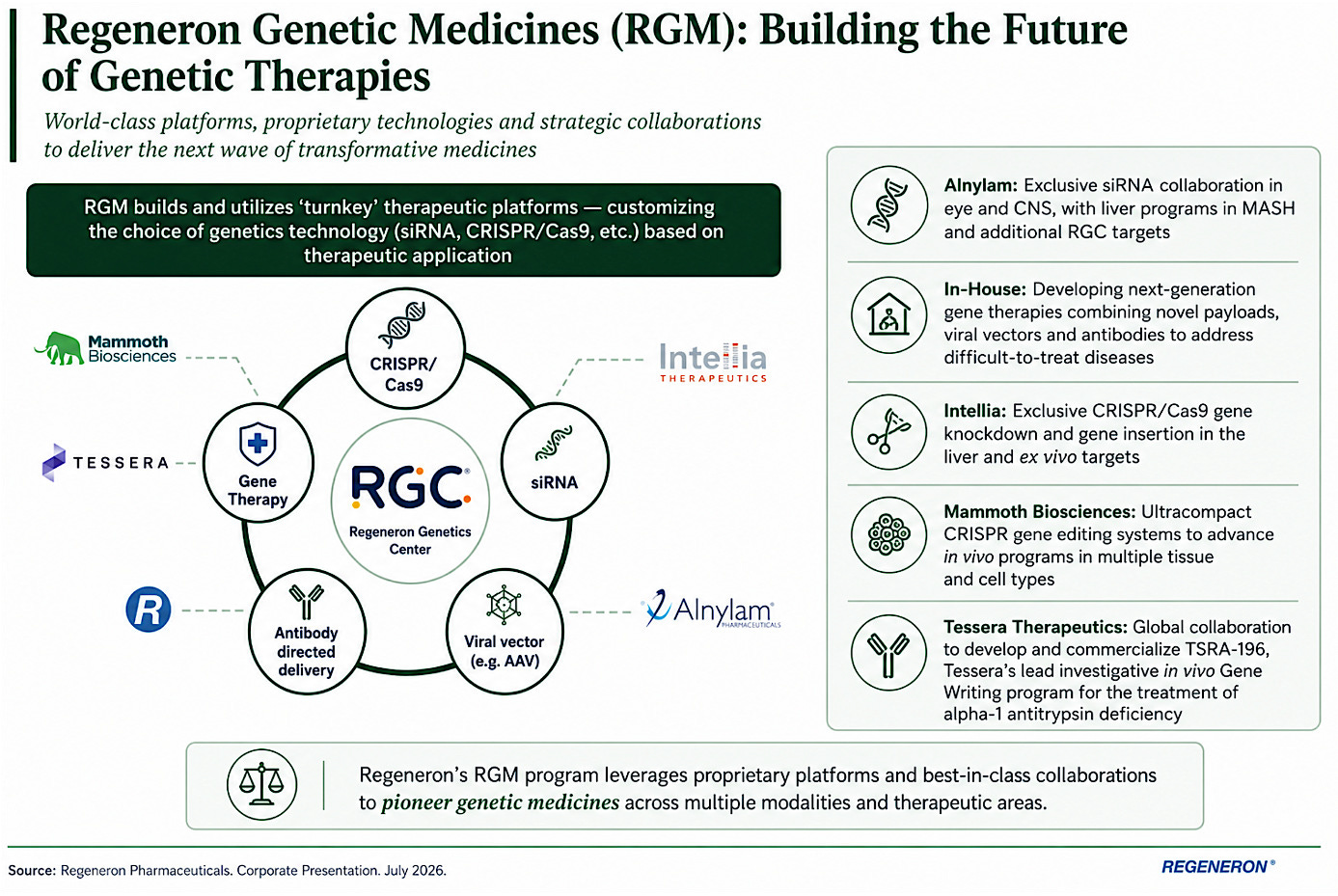
Far fewer possess proprietary human data at sufficient scale, the experimental infrastructure required to validate what those algorithms discover and the ability to transform the result into an approved medicine.
Regeneron owns all three.
It is a fully integrated biotechnology company: it identifies biological targets, engineers potential treatments, conducts clinical trials, manufactures medicines and commercialises them directly or through selected partners. Its internal research has produced 15 approved or authorised medicines over roughly fifteen years, while nearly 50 candidates are now moving through clinical development across six therapeutic areas. Most originated inside Regeneron’s own laboratories.
Yet the market is increasingly valuing the company through a different lens.
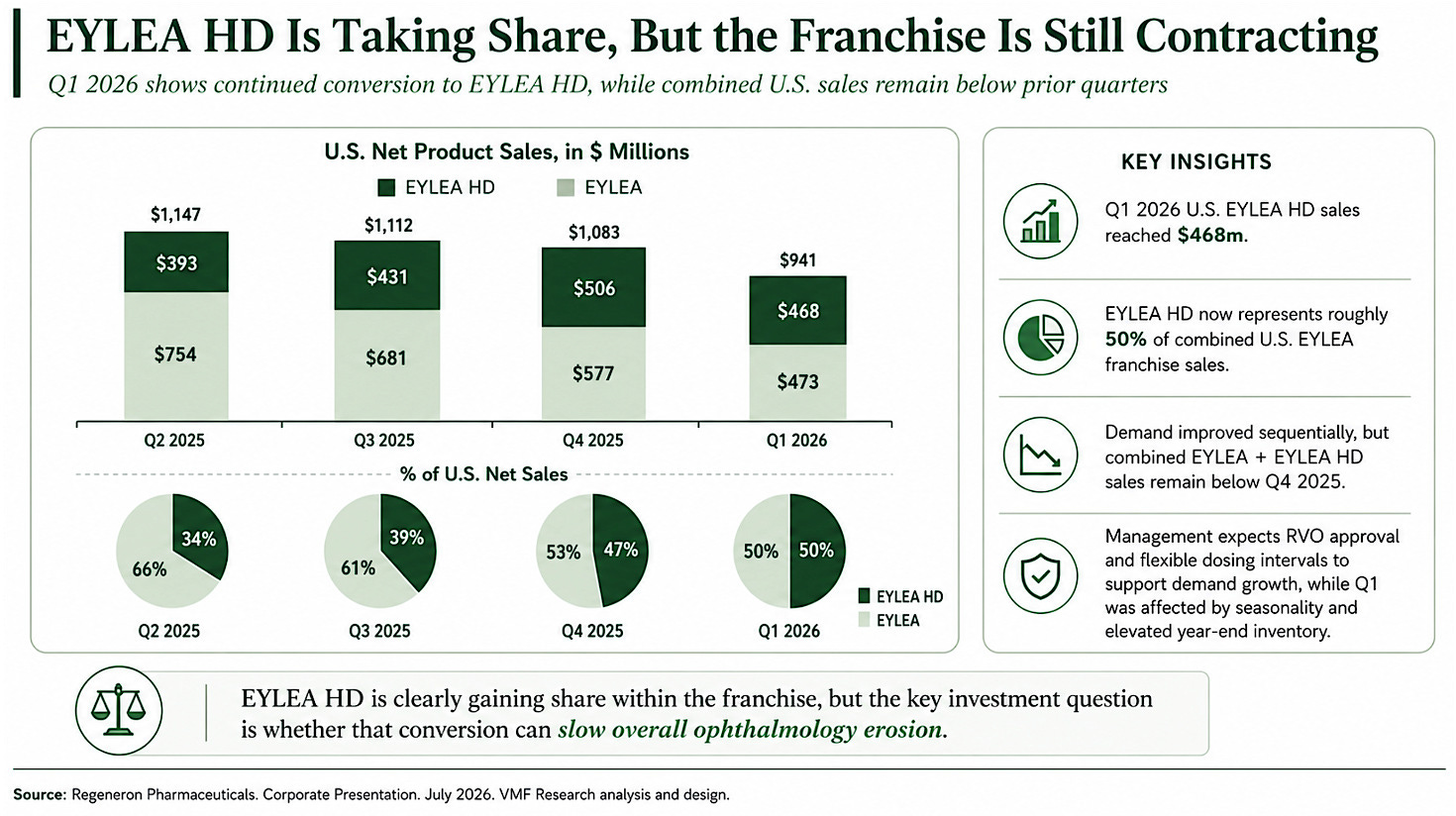
It sees the decline of EYLEA, the ophthalmology medicine that financed much of Regeneron’s expansion. That concern is legitimate. The original product is losing share to competition and biosimilars, while EYLEA HD has not yet grown quickly enough to stabilise the combined franchise.
Our thesis is not that the market has misunderstood the EYLEA problem.
It is that it may be using the wrong unit of analysis.
Regeneron is being treated increasingly as the owner of an ageing blockbuster.
We believe it should be valued as a scientific institution that has repeatedly created blockbusters... and whose proprietary data may become more valuable as the cost of intelligence falls. That distinction is the investment opportunity.
From Biological Evidence to Medicine
Most drug discovery begins with a hypothesis (the same starting point as any rigorous investment process).
Regeneron is attempting to begin with human evidence. Its Genetics Centre searches for naturally occurring genetic variations associated with disease, protection or treatment response. A harmful mutation may reveal a biological pathway that should be blocked. A protective mutation can be even more valuable: it may show that reducing the activity of a particular gene is both beneficial and tolerated by the human body.
That does not make the resulting target automatically investable. Correlation is not causation, and a statistically compelling relationship may still prove impossible to manipulate safely.
Regeneron’s advantage is that the dataset sits inside a wider experimental system. The company can test genetic associations using organoids, RNA interference, CRISPR models and humanised mice. Its proprietary VelociSuite technologies can then generate fully human antibodies, bispecific antibodies, T-cell receptors and other therapeutic formats designed to act on the validated target. Regeneron can subsequently carry the candidate through clinical development, manufacturing and commercialisation.
The economic chain is therefore unusually complete:
Human genetics identifies the possibility. Biology tests the mechanism. Technology designs the medicine. Clinical evidence determines whether it works.
Artificial intelligence can improve several decisions inside that chain. It can search relationships across genetic variants, proteins, diagnoses, treatments and longitudinal outcomes at a scale beyond conventional human analysis. It may help identify causal pathways, prioritise targets, discover biomarkers, select the patients most likely to respond and design trials capable of producing clearer evidence.
But the most valuable contribution may be less glamorous.
AI may help Regeneron decide what not to develop.
The company expects to spend between $6.45 billion and $6.68 billion on research and development during 2026. When the annual research budget is that large, terminating an unpromising programme one year earlier can create substantial value... even if the technology never discovers a blockbuster by itself.
That is how we think investors should frame the opportunity.
The near-term AI benefit is unlikely to appear as a separate revenue line. It may first appear through better capital allocation inside the laboratory: fewer weak targets reaching expensive trials, more precise patient selection and a higher proportion of resources directed towards programmes with strong human evidence.
A modest improvement in those decisions would matter.
A revolutionary improvement is not required.
The Current Business Still Has to Carry the Thesis
Regeneron’s AI and data advantage is compelling, but it cannot substitute for the economics of the existing business.
Those economics are strong...
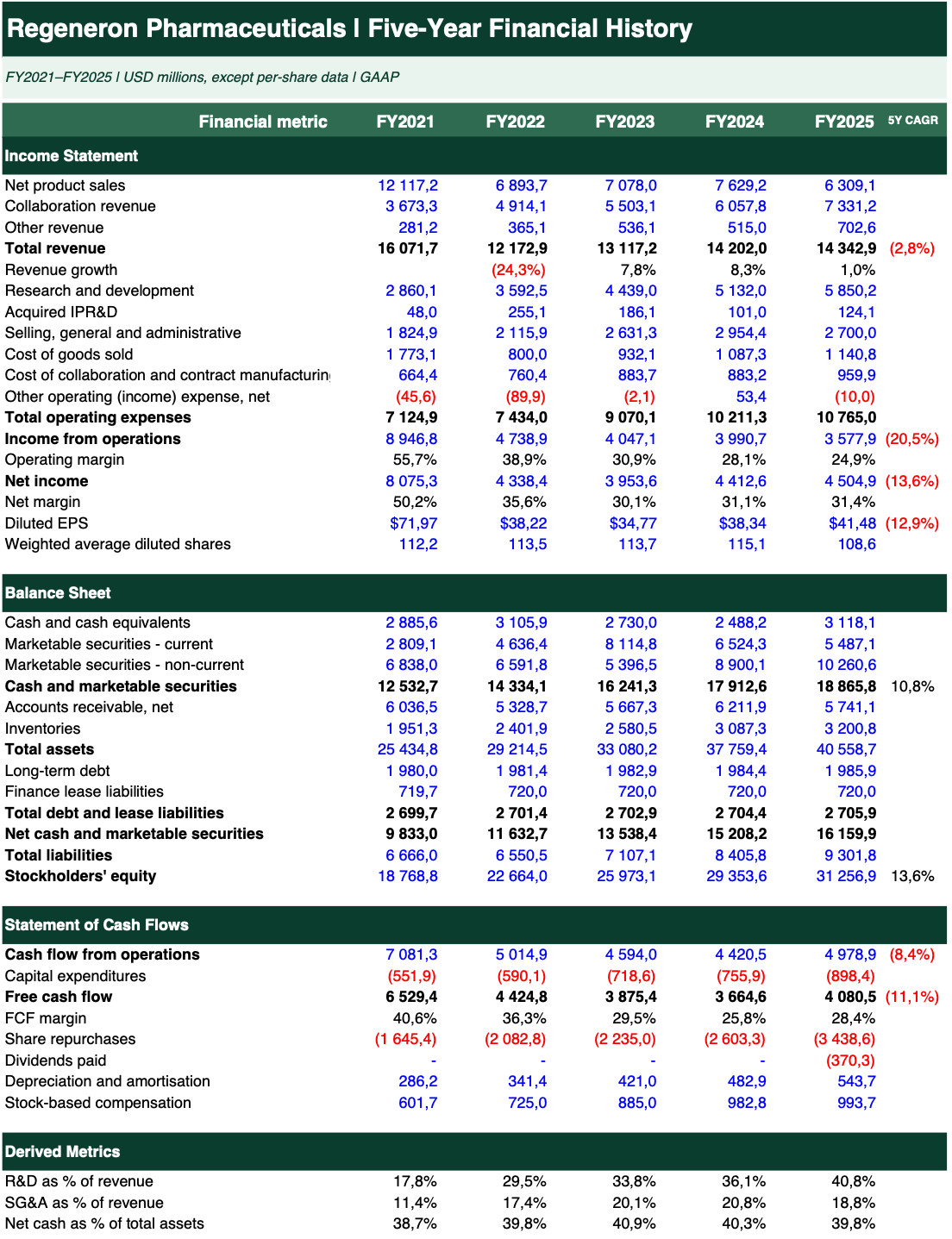
The five-year financial record tells a more nuanced story than the share-price decline suggests. Reported revenue fell sharply from $16.1 billion in 2021 to $12.2 billion in 2022, before recovering to $13.1 billion in 2023, $14.2 billion in 2024 and $14.3 billion last year. The recovery has therefore been persistent, but modest: revenue has grown at roughly 5.6% annually since 2022, with growth slowing to only 1% in 2025.
The original decline was less alarming than it appears.
Approximately $6.2 billion of Regeneron’s 2021 revenue came from REGEN-COV, its Covid-19 antibody treatment. The emergence of Omicron rendered the medicine largely ineffective, causing the FDA to restrict its use and eliminating what had always been an exceptional source of revenue. Excluding Regeneron’s Covid antibodies, underlying revenue increased 17% in 2022.
The apparent collapse was therefore primarily the disappearance of a pandemic windfall... not the deterioration of the core business.
What followed, however, has been less impressive.
Profitable Enough to Keep Investing
Regeneron remains extraordinarily well financed.
At the end of March, the company held approximately $18.5 billion of cash and marketable securities, against less than $2 billion of long-term debt and approximately $720 million of finance-lease liabilities. Net financial resources consequently approached $15.8 billion, equivalent to almost one-quarter of the company’s current market capitalisation ($73 billion).
The operating business also continues to generate substantial cash. In 2025, Regeneron produced approximately $5.0 billion of operating cash flow. After nearly $900 million of capital expenditure, free cash flow reached roughly $4.1 billion, equivalent to almost 29% of revenue. The company used that capacity to repurchase $3.4 billion of shares, pay its first $370 million of dividends and continue expanding its scientific and manufacturing infrastructure.
It did so while spending $5.85 billion on research and development, or almost 41% of revenue. During the first quarter of 2026, R&D rose another 16% to $1.54 billion (nearly 43% of quarterly revenue).
That combination is rare:
Regeneron can invest more than $6 billion annually in future medicines while continuing to generate billions in free cash flow and maintaining a fortress balance sheet.
The financial capacity is not in question.
The productivity of the capital being deployed is.
Why Revenue Is Languishing
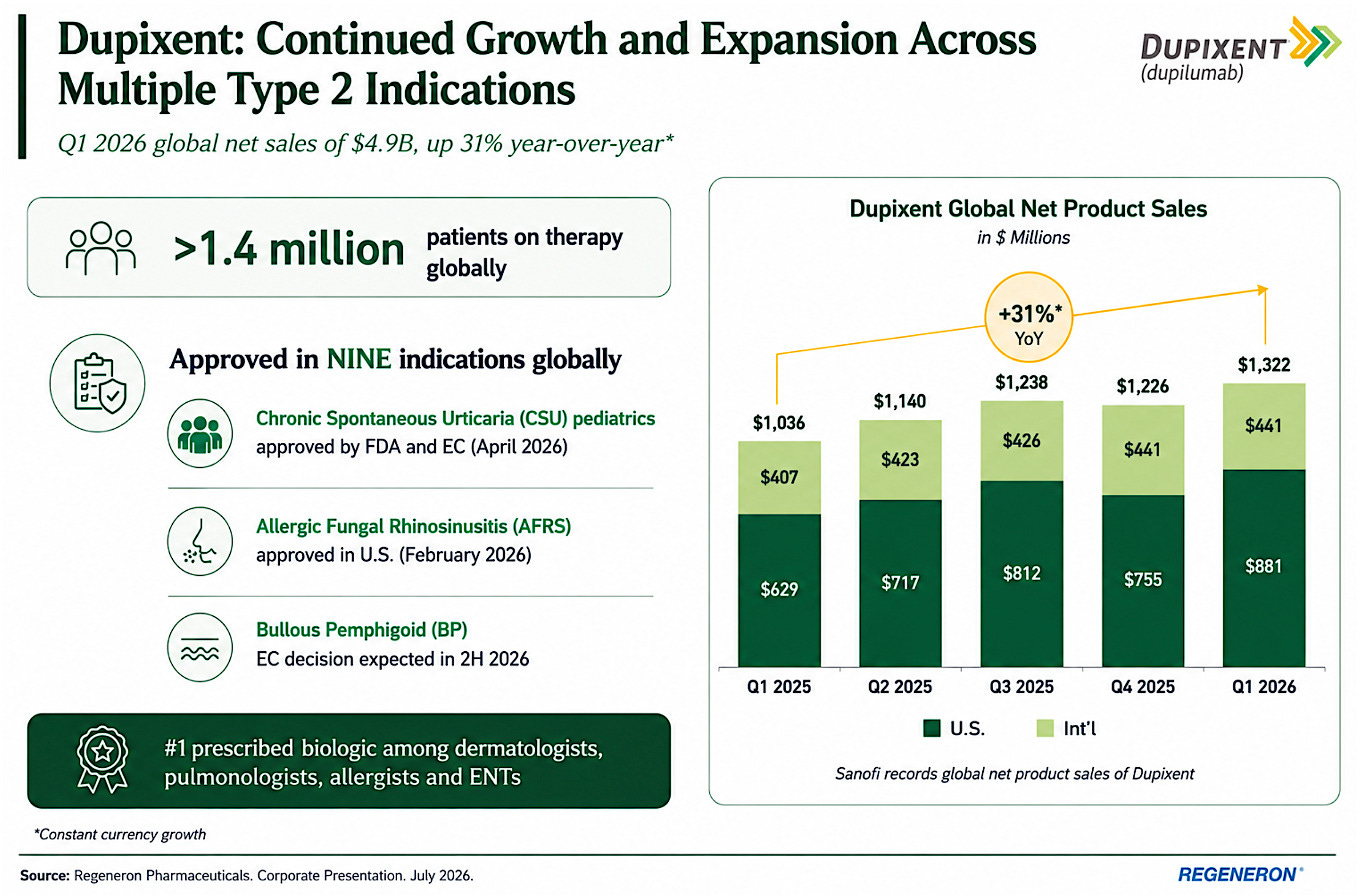
Regeneron’s present revenue profile is being pulled in opposite directions. Net product sales fell from $7.6 billion in 2024 to $6.3 billion in 2025. Over the same period, collaboration revenue increased from $6.1 billion to $7.3 billion. Most of that increase came from Regeneron’s share of the rapidly expanding profits generated by Dupixent, while most of the pressure came from the declining EYLEA ophthalmology franchise.
In simple terms: Dupixent is replacing what EYLEA is losing but not yet creating enough incremental growth to make the broader company accelerate.
The accounting also obscures some of the underlying progress. Sanofi records Dupixent’s global product sales. Regeneron reports its contractual share of the collaboration profits rather than the entire revenue generated by the medicine. Dupixent and Kevzara sales reached $18.4 billion in 2025, up from $14.6 billion, while Regeneron’s Sanofi collaboration revenue increased by approximately $1.35 billion.
The growth is real.
It simply appears differently in Regeneron’s financial statements.
EYLEA is the mirror image. Regeneron records US sales directly, so the decline is fully visible in reported product revenue. Competitive treatments, falling net prices, the migration of patients to EYLEA HD and the arrival of biosimilars have all pressured the original formulation. More biosimilar launches are expected during the second half of 2026.
The company is therefore undergoing a difficult but understandable transition:
From pandemic revenue to recurring franchises.
From legacy EYLEA towards EYLEA HD.
From direct product revenue towards greater Dupixent collaboration economics.
From a smaller research organisation towards a much broader (and more expensive) development platform.
The business is not stagnant.
Its strongest growth engine is being offset by its most visible decline.
Where the Next Revenue Can Come From
The bull case does not depend on one heroic breakthrough. It depends on several existing and emerging engines beginning to work at the same time.
Dupixent remains the clearest source of growth.
Its underlying biology extends across multiple Type 2 inflammatory diseases, giving Regeneron and Sanofi room to expand the franchise through new indications, geographies and age groups. Regeneron’s share of commercial profits rose strongly again in the first quarter, while the remaining historical development balance owed to Sanofi is nearing repayment. Once cleared, a larger share of future collaboration economics should flow through to Regeneron. Dupixent will inevitably slow as the base becomes larger, but it does not need to sustain 30%-plus growth. Continued double-digit expansion would be enough to support the company while the rest of the portfolio matures.
Libtayo is also becoming economically relevant. First-quarter sales rose 54% to $438 million, with Regeneron retaining greater control over the economics than it does with Dupixent. Lynozyfic broadens the oncology portfolio, while garetosmab and cemdisiran could receive regulatory decisions before year-end. None is likely to replace EYLEA alone. Together, they reduce the need for any single asset to do so.
The longer-duration opportunity lies in Factor XI inhibition, metabolic disease, oncology, genetic medicines and additional immunology programmes. This is where Regeneron’s data and AI advantage matters most. The immediate benefit is unlikely to appear as a separate revenue line. It should appear first in better decisions over which programmes deserve capital (and which should be abandoned earlier). When annual R&D spending exceeds $6 billion, avoiding one costly failure can be almost as valuable as accelerating one success.
EYLEA HD is the bridge between the current business and that future.
The product is gaining traction. As the chart on page 10 makes clear, EYLEA HD is gaining share within the franchise, but not yet quickly enough to offset the decline of legacy EYLEA. Some of the recent weakness reflects seasonality and inventory normalisation... but the more important pressure is structural, driven by lower pricing, competing therapies and biosimilars.
EYLEA HD nevertheless has credible advantages: longer and more flexible dosing intervals, an expanded label, a potential pre-filled syringe and deep relationships with retinal specialists. Those strengths may eventually return the franchise to modest growth.
But that is not our base case.
The hurdle is lower... and more realistic:
EYLEA HD does not need to recreate peak EYLEA. It needs to slow the decline enough for Dupixent, Libtayo and the pipeline to become visible through it.
A return to growth would be meaningful upside. Stability would already be enough to support the thesis.
What Can Go Wrong
The principal risk is that Regeneron’s transition takes longer than the market or the financial model can tolerate.
Dupixent and the US EYLEA franchise together still accounted for approximately 71% of first-quarter revenue. Diversification across nearly 50 clinical programmes is not the same as diversification of present cash flow.
Several developments could weaken the thesis materially:
EYLEA biosimilars could accelerate pricing and volume erosion before EYLEA HD reaches sufficient scale.
Dupixent growth could normalise more quickly than expected, leaving the company dependent on products that are not yet economically material.
The pipeline could produce medically useful but commercially modest medicines.
R&D expenditure could continue rising while operating margins compress.
The company’s large securities portfolio can make GAAP net income more volatile and less representative of underlying operating earnings.
AI may improve discovery efficiency without solving the late-stage clinical failures that consume the greatest amount of capital.
Pharmaceutical pricing policy could constrain returns on future innovation.
The fianlimab1 melanoma failure is a useful reminder. Regeneron can possess world class scientists, proprietary data and sophisticated technology—and biology can still refuse to cooperate.
The quality of the platform reduces risk.
It does not remove it.
Valuation: What Has to Happen by 2028
Regeneron is not priced as a distressed biotechnology company. Nor does the current valuation require flawless execution.
At approximately $678 per share, the equity is valued at roughly $73.0 billion. Against trailing sales of approximately $14.9 billion, free cash flow of $4.1 billion and EBITDA of about $4.2 billion, the shares trade at 17.7 times free cash flow. The company’s $15.8 billion net-cash position reduces enterprise value to approximately $57.1 billion, equivalent to 3.8 times sales and 13.7 times EBITDA.
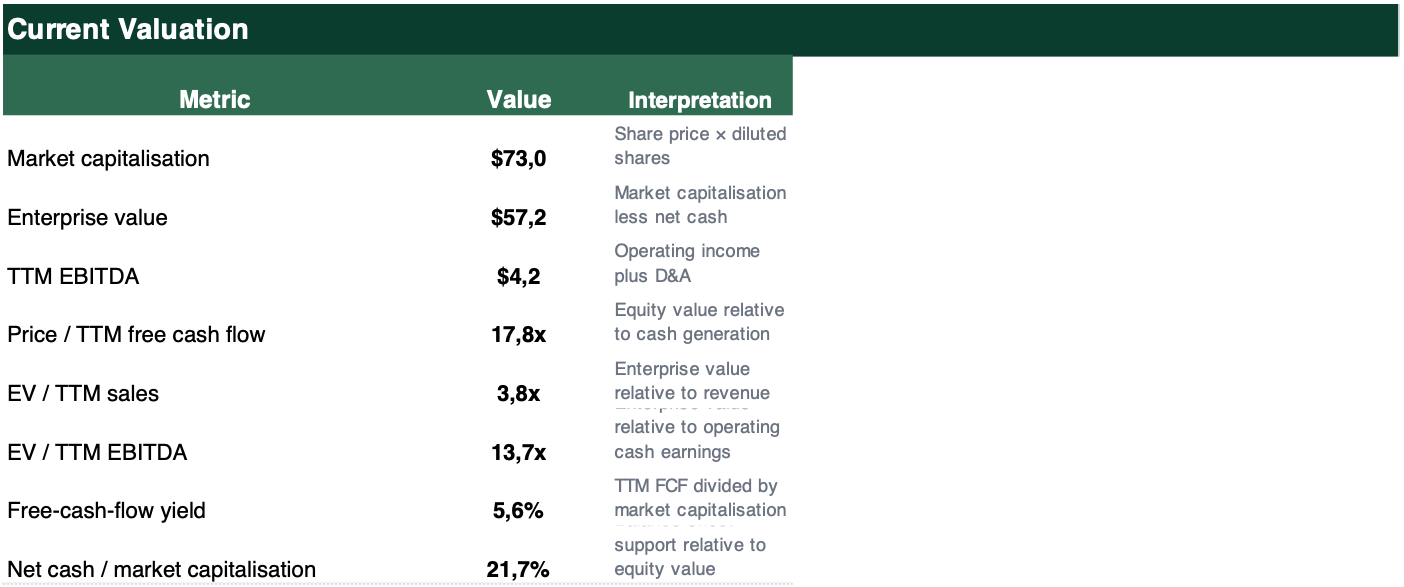
Those multiples are not obviously cheap in isolation. They become more interesting when attached to a net-cash company that continues to generate substantial free cash flow while investing more than 40% of revenue in research.
We value Regeneron primarily on 2028 free cash flow. That gives Dupixent time to expand, EYLEA HD time to moderate ophthalmology erosion and the emerging portfolio time to become more economically visible. Importantly, our base case assigns no explicit revenue to AI. Better intelligence is reflected only through the possibility of more productive research allocation and greater durability beyond the forecast period.
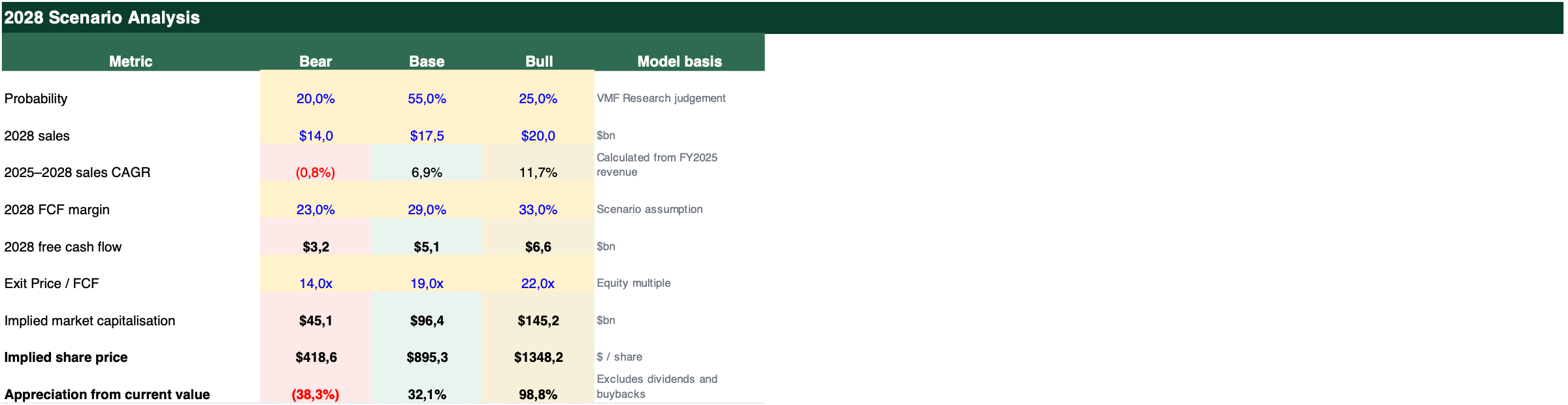
The bear case does not require a scientific collapse. EYLEA erosion simply remains severe, Dupixent slows before new products become material and elevated R&D spending prevents margins from recovering. Regeneron remains profitable, but the market values it increasingly like a mature pharmaceutical company.
The base case assumes something less dramatic: Dupixent continues growing at a sustainable rate, EYLEA HD bends the ophthalmology decline, Libtayo and the emerging portfolio broaden the revenue base and free-cash-flow margins remain close to recent levels. A modest rerating to 19 times FCF would produce approximately 33% market-cap appreciation.
The bull case requires the engines to align. Ophthalmology stabilises, Dupixent remains unusually durable, several new medicines become commercially meaningful and investors begin assigning greater value to Regeneron’s scientific platform and proprietary data. Under those conditions, double-digit sales growth and operating leverage could nearly double the company’s equity value.
Applying probabilities of 20% to the bear case, 55% to the base case and 25% to the bull case produces a probability-weighted market capitalisation of approximately $99 billion, or roughly 35% above the current level, before dividends and share repurchases.
That is attractive, but not riskless.
The valuation offers a reasonable price for exceptional scientific and financial quality... not a margin of safety large enough to ignore product concentration or clinical attrition. It supports a 2% position, while preserving room to increase the allocation if the financial and technical evidence continues to improve.
The Chart Is Reaching a Decision
The technical setup is becoming more constructive, but confirmation has not yet arrived.
After falling sharply from its 2024 peak, Regeneron has spent more than a year compressing inside a large triangle. Descending resistance from the previous high is converging with rising support from the 2025 low, leaving the shares close to a visible decision point.
Price remains marginally below the 20- and 50-week moving averages and well beneath the 200-week average. Those levels still represent resistance.
Encouragingly, however, the shares are challenging the shorter-term averages as relative strength against the broader equity market begins to improve after a prolonged period of underperformance.
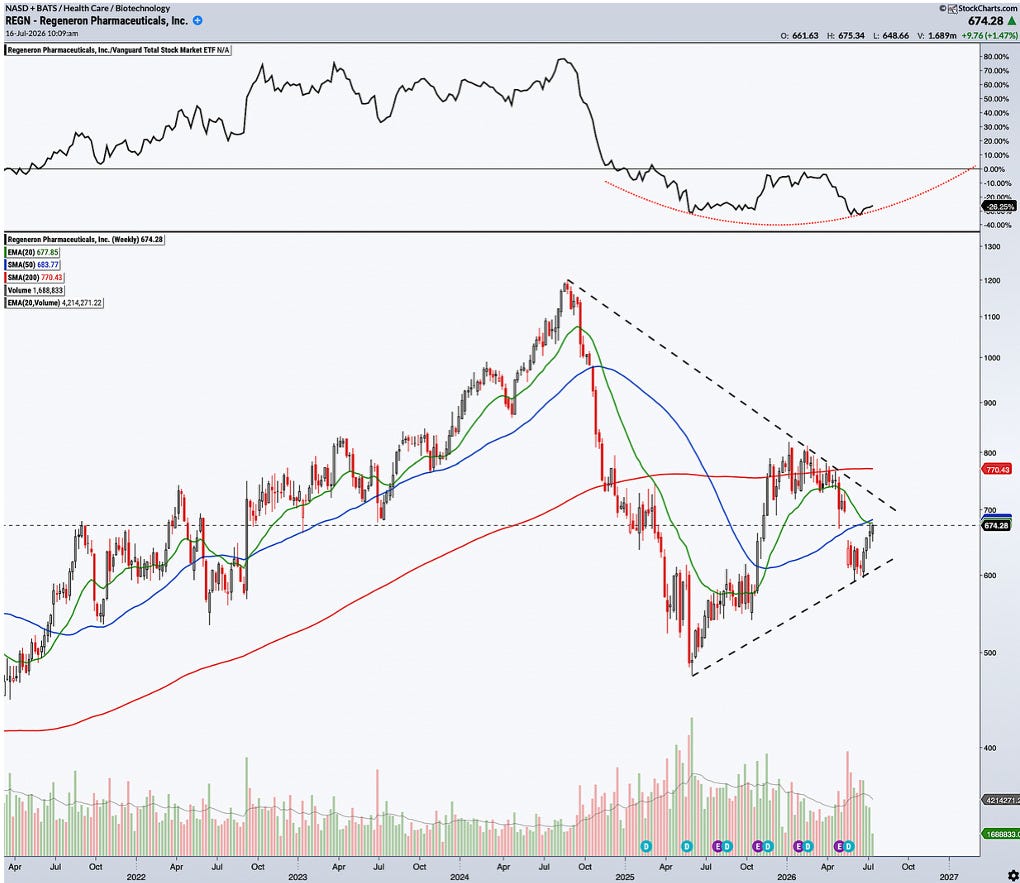
The triangle can still resolve in either direction.
A breakout above descending resistance and the nearby moving averages would indicate that investors are beginning to look beyond EYLEA’s erosion and towards Dupixent’s durability, the pipeline and Regeneron’s longer-term scientific optionality. A break below rising support would undermine the recovery and expose meaningful downside.
Our constructive view on healthcare (and biotechnology in particular) raises the probability, in our judgement, of an upside resolution. Sector participation is broadening, biotech has already broken out and Regeneron is approaching resistance as its relative performance begins to repair.
This has been a lengthy thesis because the opportunity demands it. The upside is substantial, but so are the product-concentration, clinical and execution risks; the downside must be underwritten rather than dismissed. Our next recommendation will require less extensive treatment because, in our assessment, its fundamental risk profile is materially lower.
You might also like reading, The Intelligence Dividend - How cheaper AI cuts biopharma’s $300B failure risk and drives the next healthcare rotation:

Important Disclosure
This article contains general investment research produced by Vasco Marques de Freitas, CFA, CMT, Founder and CEO of VMF Research, Lda. It reproduces an excerpt from the July 2026 issue of VMF’s Security Selection. The research, views, valuation analysis and Quality Model Portfolio information are stated as of 17 July 2026, 4:00 p.m. Eastern Daylight Time, unless another date is expressly identified. The original issue was first disseminated to paid subscribers on 17 July 2026 at 9:00 p.m. Eastern Daylight Time.
The publication contains information recommending or suggesting an investment strategy. It is not personalised investment advice and does not consider any reader’s individual objectives, financial circumstances, knowledge, experience, liquidity requirements or tolerance for risk. VMF Research’s Model Portfolios are illustrative research portfolios and do not represent client assets or transactions executed by VMF Research.
The analysis combines thematic, fundamental, scientific, valuation and market research within a medium- to long-term investment framework. Forecasts, scenario outcomes, valuation estimates and statements concerning the potential effects of artificial intelligence are analytical judgments rather than assurances. Sources and the basis for material factual claims are identified throughout the article. Views and conclusions may change as scientific, clinical, regulatory, corporate or market evidence evolves and are reviewed through VMF Research’s monthly publications, with weekly or ad hoc updates where appropriate.
Investments in Regeneron Pharmaceuticals and other biotechnology companies involve substantial risks, including clinical-trial failure, regulatory rejection, product concentration, loss of intellectual-property protection, biosimilar and competitive pressure, adverse pricing or reimbursement decisions, rising research expenditure, scientific uncertainty, market volatility and the possible loss of capital. Artificial intelligence may improve research productivity without producing successful medicines, higher earnings or superior investment returns. Technical patterns and valuation assumptions may also fail.
Disclosure of interests: as of the research cut-off, neither VMF Research, Lda., Vasco Marques de Freitas personally, nor any legal entity controlled by him held a position in Regeneron Pharmaceuticals or in any other financial instrument mentioned in this article. Neither VMF Research nor the author received compensation from any issuer discussed in connection with the preparation of this research, and no issuer reviewed or approved its conclusions before first dissemination.
Past performance is not indicative of future results. Readers should conduct their own analysis and, where appropriate, consult an authorised financial adviser before making an investment decision.
Fianlimab is an experimental antibody that blocks LAG-3, an immune checkpoint, and was tested with Regeneron’s PD-1 inhibitor Libtayo in previously untreated advanced melanoma. In May 2026, the pivotal Phase 3 trial failed to achieve statistical significance on its primary progression-free-survival endpoint versus pembrolizumab, despite a 5.1-month numerical improvement in median progression-free survival at the higher dose and no new safety signal. It was a genuine clinical failure—but also a reminder that a persuasive mechanism and encouraging early data do not guarantee a successful pivotal trial.