

“There is nothing more deceptive than an obvious fact.”
Arthur Conan Doyle
Kevin Warsh’s first FOMC meeting appeared, at first glance, to challenge one of our highest-conviction working hypotheses: That markets are vulnerable to a Dovish Shock.
The Federal Reserve left interest rates unchanged, but the tone was unmistakably different. Forward guidance disappeared. Price stability moved to the center of the message. And the latest projections suggested that a meaningful portion of the Committee now sees higher rates before the end of the year.
The market’s verdict was immediate.
Warsh had introduced a hawkish bias. But is that really the whole story?
Warsh launched five reviews covering communications, the balance sheet, data, productivity and employment, and inflation.
Two are especially relevant to our thesis. He argued that AI-driven productivity could allow strong growth, low inflation, and high employment to coexist... precisely the framework we outlined in June.
He also questioned the Fed’s reliance on lagging, heavily revised statistics, favoring more real-time private-sector data and AI-enabled analysis.
A Fed looking through the windshield may reach very different conclusions from one staring into the rear-view mirror.
This does not make Warsh dovish yet. But the market may be extrapolating too much from one press conference.
Elsewhere, Asia produced a striking divergence.
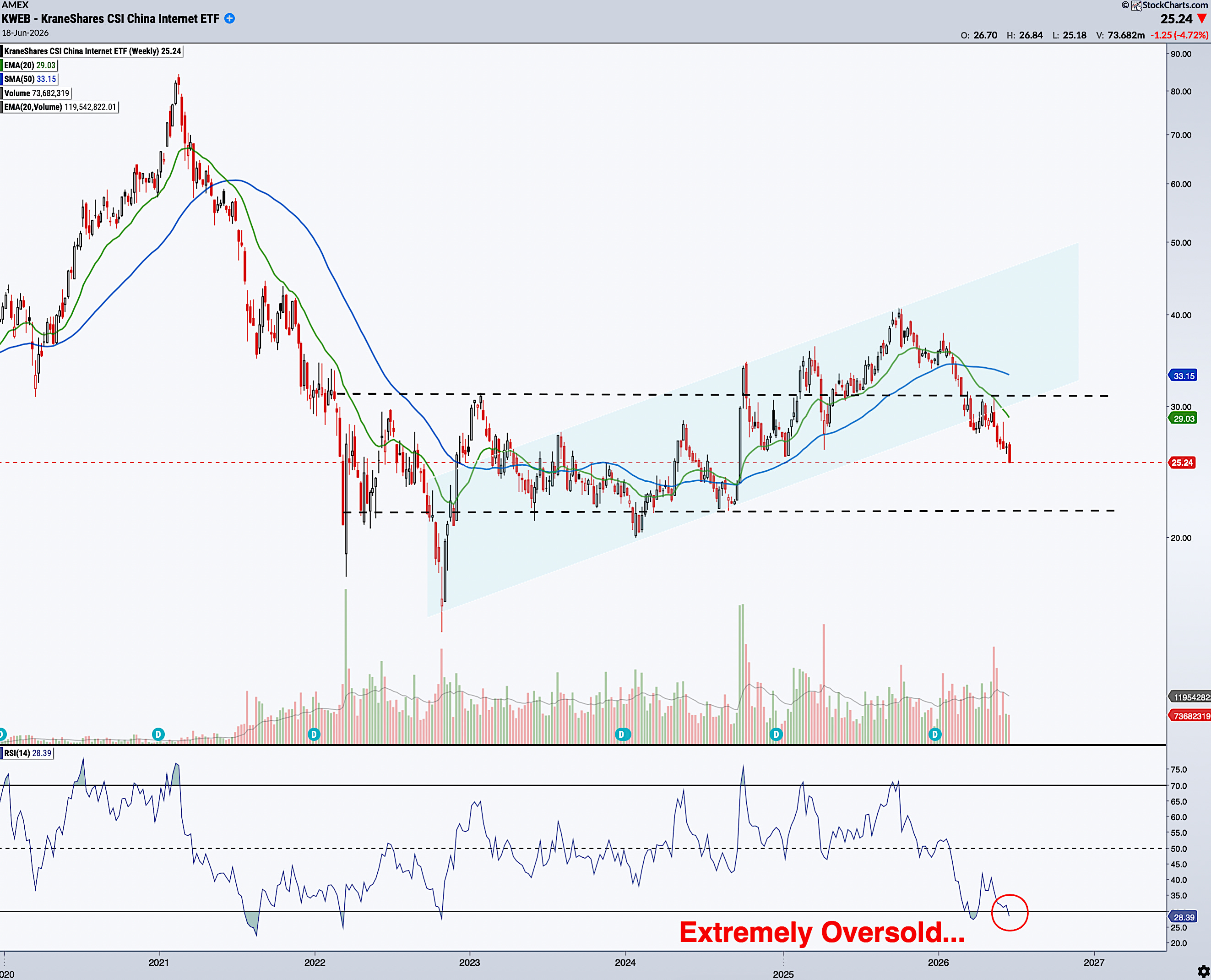
Chinese technology stocks continue to fall. KWEB has broken below its rising channel, sentiment remains exceptionally poor, and the weekly RSI is deeply oversold.
The prevailing consensus is clear: China is uninvestable.
We disagree.
Chinese technology remains one of the cheapest, most unloved, and potentially powerful expressions of the AI application layer.
The technical picture is weak, but that weakness is precisely what creates the asymmetry.

Japan sits at the opposite extreme. The yen keeps depreciating. Sovereign yields keep rising. Yet Japanese equities continue making higher highs. Our exposure through EWJ remains one of the Model Portfolio’s strongest pockets of relative performance.
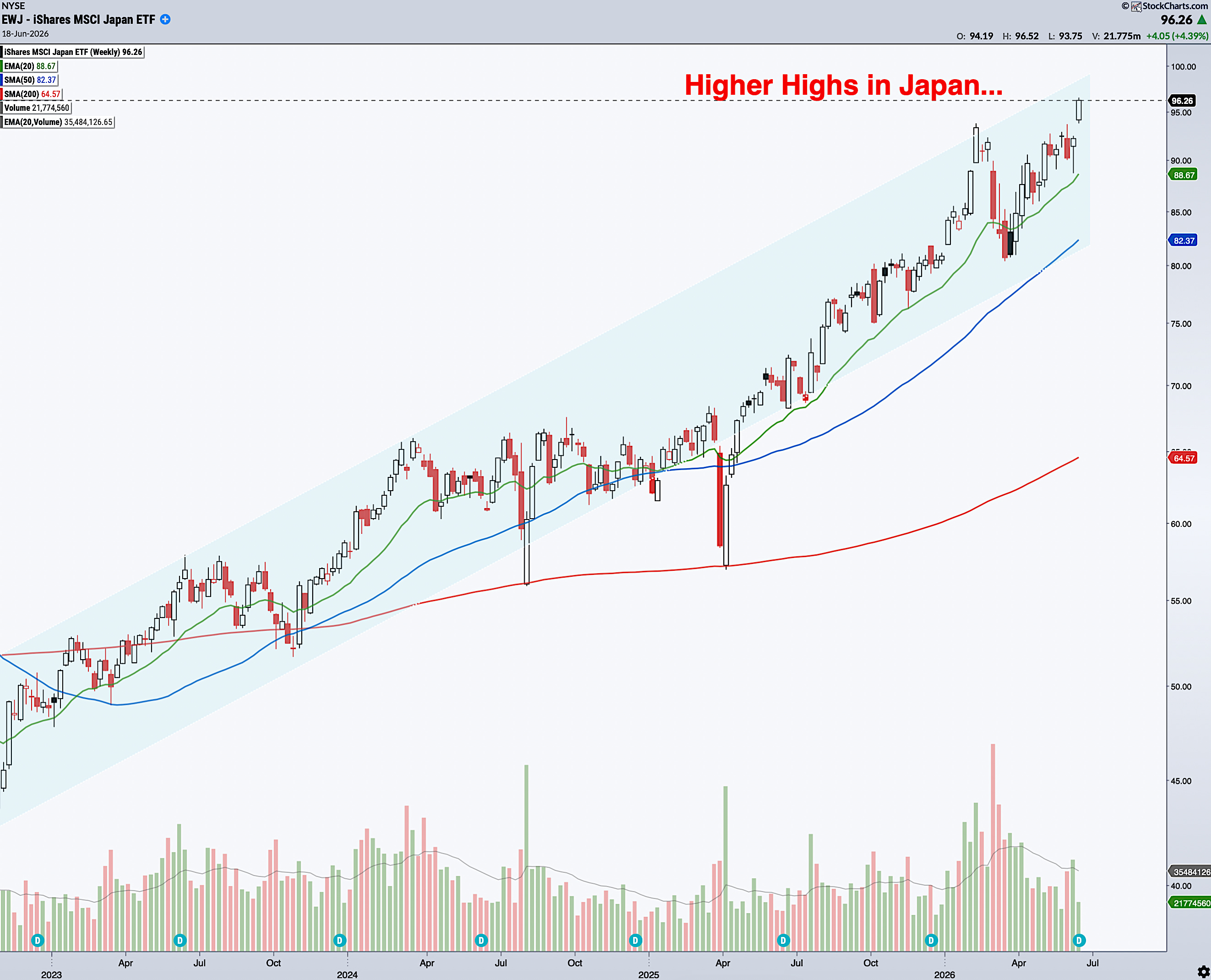
While investors debate the macro contradictions, price keeps rewarding Japanese corporate reform and improving profitability.
Beat the old playbook.
Get institutional-grade research delivered to your inbox.
Finally, both senior and junior gold miners ended the week with powerful reversal candles. GDX briefly broke below its widely watched 50-week moving average, rejected those lower prices, and closed back above support.
That is the kind of weekly hammer we notice.
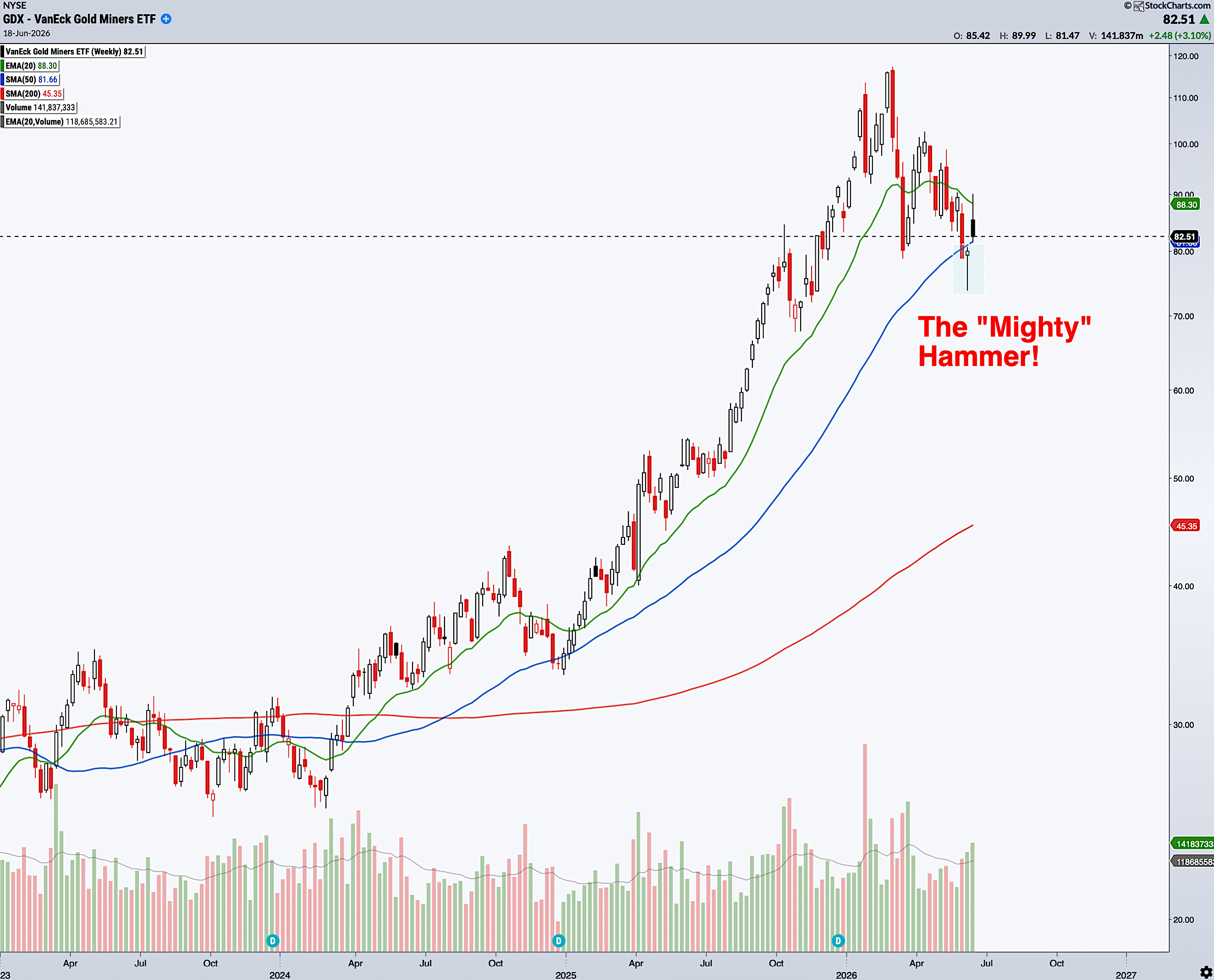
It is not confirmation that the correction is over. But it may signal that sellers are exhausting themselves precisely where pessimism has become extreme.
And... it may be an early indication that our Dovish Shock thesis remains alive.
Warsh’s first appearance sounded hawkish. But his emphasis on productivity, real-time data, and the compatibility of strong growth with lower inflation suggests his reaction function may ultimately prove far more dovish than the market anticipates.
Stay tuned.
Good investing!
Vasco Marques de Freitas, CFA, CMT
A quick note on accountability.
We don’t publish these theses to be right on paper. We publish them to express edge in the real economy. Our Leaderboard shows the exact scorecard since inception, tracking every position, our compounding outperformance against the market, and the triple-digit winners we’ve captured along the way.
You can view the exact numbers on our Leaderboard.
Disclaimer: This is general information, not personalized investment advice. It’s not a recommendation to buy or sell anything. Investing involves risk, and past performance doesn’t guarantee future results. Do your own research and consider speaking with a licensed/authorized professional who understands your objectives and risk profile.