

“The eye sees only what the mind is prepared to comprehend.”
Henri Bergson
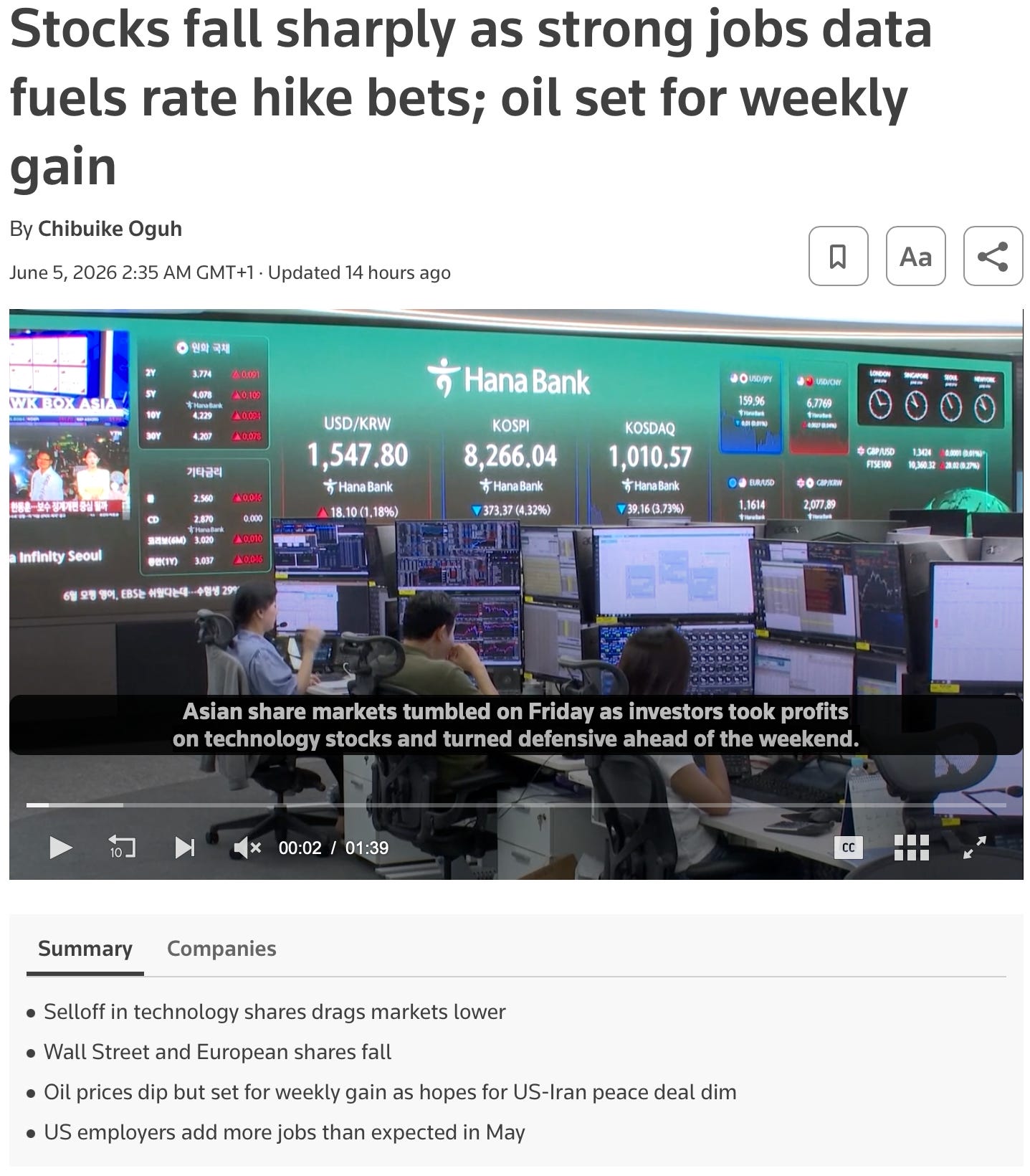
One of the strongest pillars supporting our Great Acceleration thesis has always been the labor market. And this week, it delivered another important piece of evidence.
The latest employment report came in far stronger than expected, with nonfarm payrolls rising by 172,000 versus consensus expectations of just 88,000.
Better still, previous months were revised higher and wage growth remained relatively contained. In other words, the economy appears to be accelerating without the kind of wage pressures typically associated with an inflationary boom.
Yet the market’s reaction was anything but constructive. Virtually every major asset class sold off as investors rushed to price in a more hawkish Federal Reserve. Treasury yields jumped, equities fell, precious metals weakened, and Bitcoin, one of the hardest-hit assets of the day, retreated sharply as traders suddenly began entertaining the possibility of additional rate hikes later this year.
The reaction was severe enough to draw a response from President Trump himself.
And while we rarely focus on political commentary, his remarks reveal that he understands exactly what happened.
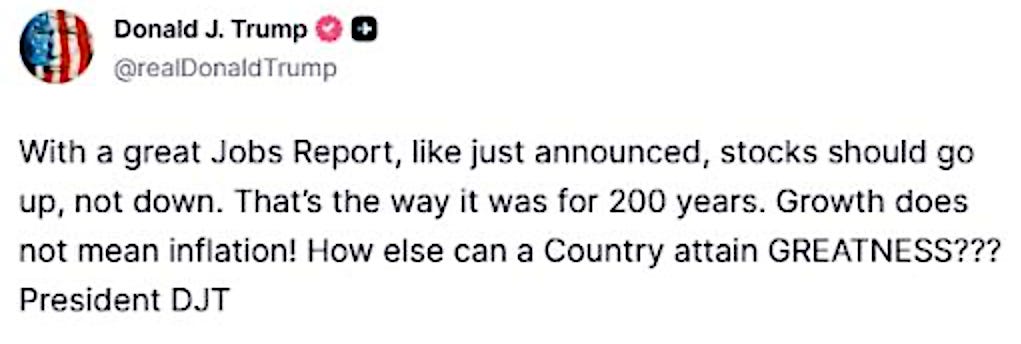
Markets were not reacting to stronger growth. They were reacting to the belief that stronger growth would force the Fed to tighten policy once again.
Here, however, we continue to disagree with the market.
Our view remains that incoming Fed Chair Kevin Warsh is likely to prove considerably more dovish than investors currently expect. More importantly, we believe the market may still be struggling to distinguish between inflationary growth and productivity-driven growth.
Rising employment, subdued labor costs, improving productivity, and the accelerating adoption of AI are not necessarily ingredients for higher inflation. They may instead be laying the groundwork for stronger growth alongside lower inflation pressures than most investors currently anticipate.
Meanwhile, sentiment has deteriorated rapidly. Bitcoin, in particular, now finds itself testing an important support zone precisely as pessimism approaches levels typically associated with better long-term opportunities than risks.
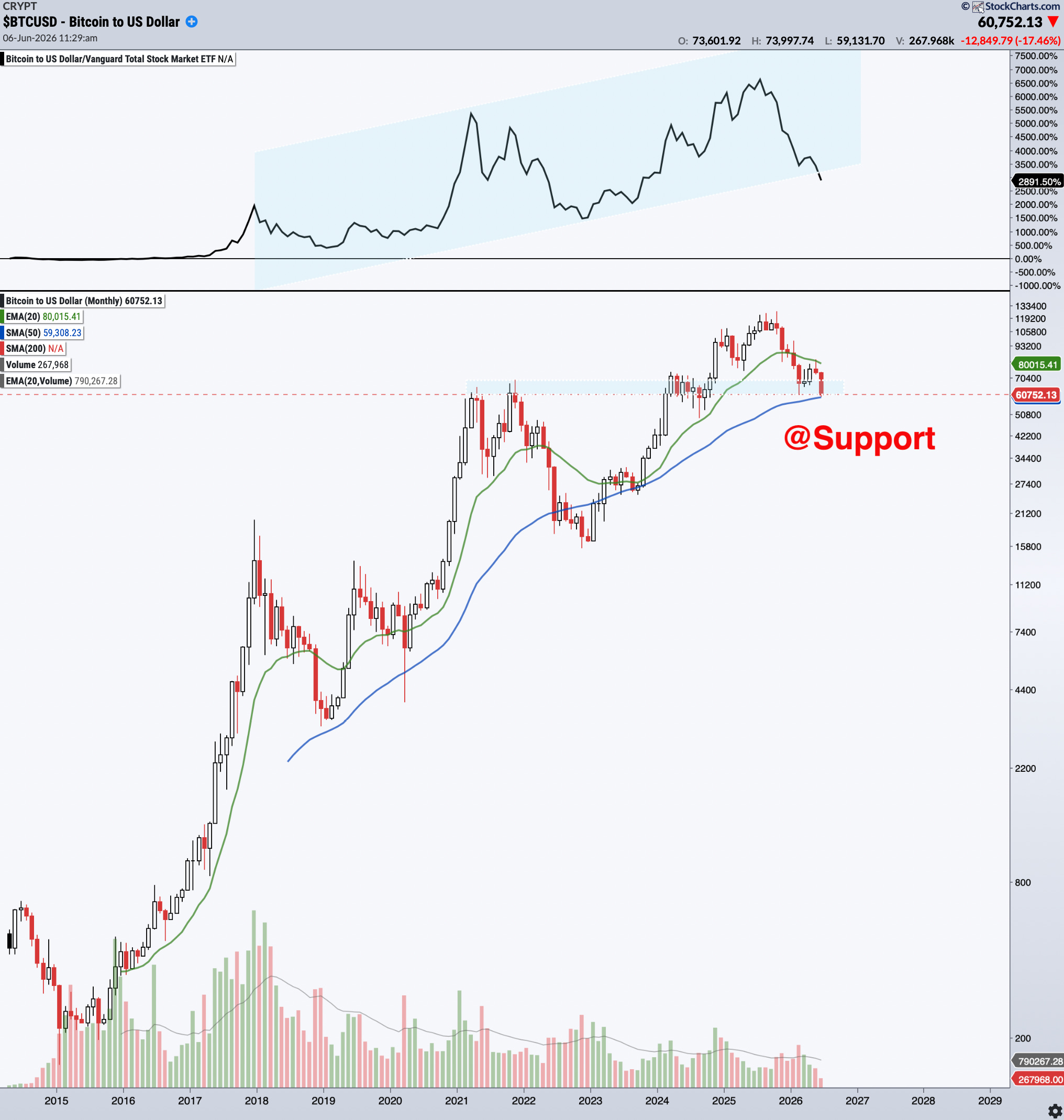
Taken together, the latest economic data, the market’s reaction, and the growing divergence between fundamentals and sentiment are creating one of the most fascinating macro environments we’ve seen in years.
Which is why next week’s issue of VMF’s Strategic Asset Allocation will be particularly important. We’ll revisit some of our highest-conviction theses and assess whether recent developments are strengthening (or challenging) the framework we’ve been building for months.
Stay tuned.
Good investing!
Vasco Marques de Freitas, CFA, CMT
Beat the old playbook. Get institutional-grade research delivered to your inbox.
Disclaimer
The information provided herein is for general informational purposes only and does not constitute financial advice or a recommendation to buy, sell, or hold any investment. It is not tailored to any specific individual or investor profile. All investments involve risks, and past performance is not indicative of future results. Before making any investment decisions, it is important to consider your own financial situation and risk tolerance. We do not guarantee the accuracy, completeness, or reliability of any information provided, and we disclaim any liability for any loss or damage arising from reliance on the information herein. Readers are advised to consult with an authorized financial intermediary before making any investment decisions.
You might also like reading:

172k payrolls is a strong number.
But one employment report alone doesn't prove a "Great Acceleration."
The broader question is whether labor market strength is translating into stronger growth, credit creation, and earnings. That's where the macro debate still sits.