

Markets are sprinting. Narratives are multiplying. The job is simple to say and hard to do: participate in the upside without getting emotionally trapped near the top. That’s the core of this week’s post. We lay out the short-term cycle case for a strong Q4 (yes, “Uptober” in crypto has history), but keep the focus on risk discipline—entries, exits, and sizing rules set before the tape gets loud.
I frame the backdrop like this: long-term “Fourth Turning” risk is still rising, but the short-term cycle argues for strength. When that happens, the process becomes the edge. Pilots and surgeons don’t wing it when complexity spikes; they use checklists. Investors should too. The small errors you skip under stress are exactly the ones that snowball into big regrets.
Why I keep hammering checklists
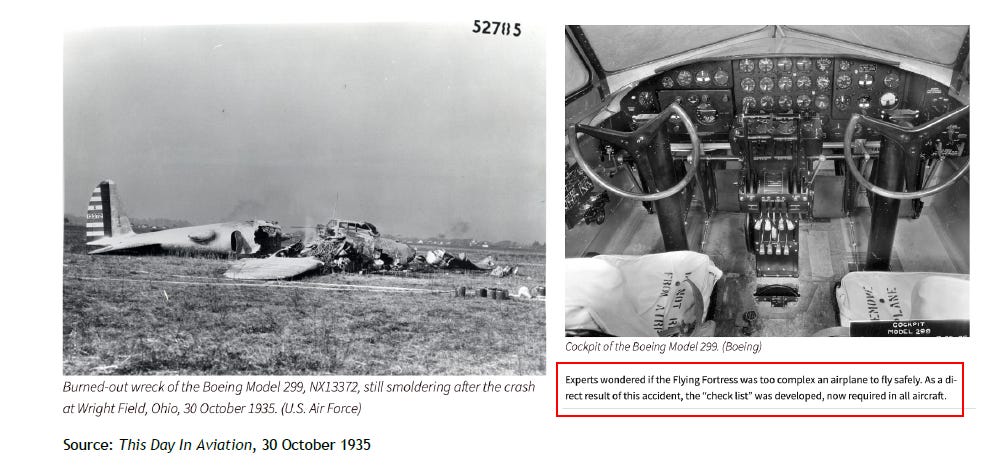
Two stories anchor the case. In 1935, Boeing’s Model 299 crashed—not because pilots lacked skill, but because a critical step was missed. The fix wasn’t a new engine; it was a checklist. With it, crews later flew more than a million miles without an accident and the plane became the B-17 “Flying Fortress.” The lesson: under complexity, failure shifts from not knowing to not doing. Write it down; run the list.
Fast forward to 2009. Flight 1549 loses both engines over New York. The “miracle” on the Hudson? It was disciplined under pressure: the crew worked the dual-engine failure procedures from the QRH, turning panic into sequence. Same logic in the operating room. The WHO’s surgical safety checklist cut major complications by roughly a third and nearly halved mortality. A few boxes on a page beat ego and noise. Process > heroics.
Investing is in the same arena. Buffett’s twelve tenets are a fundamentals checklist. Munger built a thinking checklist: measure risk first, embrace humility, be patient, and keep it simple. On the technical side, Marty Zweig’s 17 rules are a trader’s code: “trend is your friend,” “don’t fight the Fed,” cut losses fast, let winners run. Different uniforms, same tool. Process is the constant.
The two cycles that actually move the tape
I keep coming back to two dials: Liquidity and Debt Refinancing.
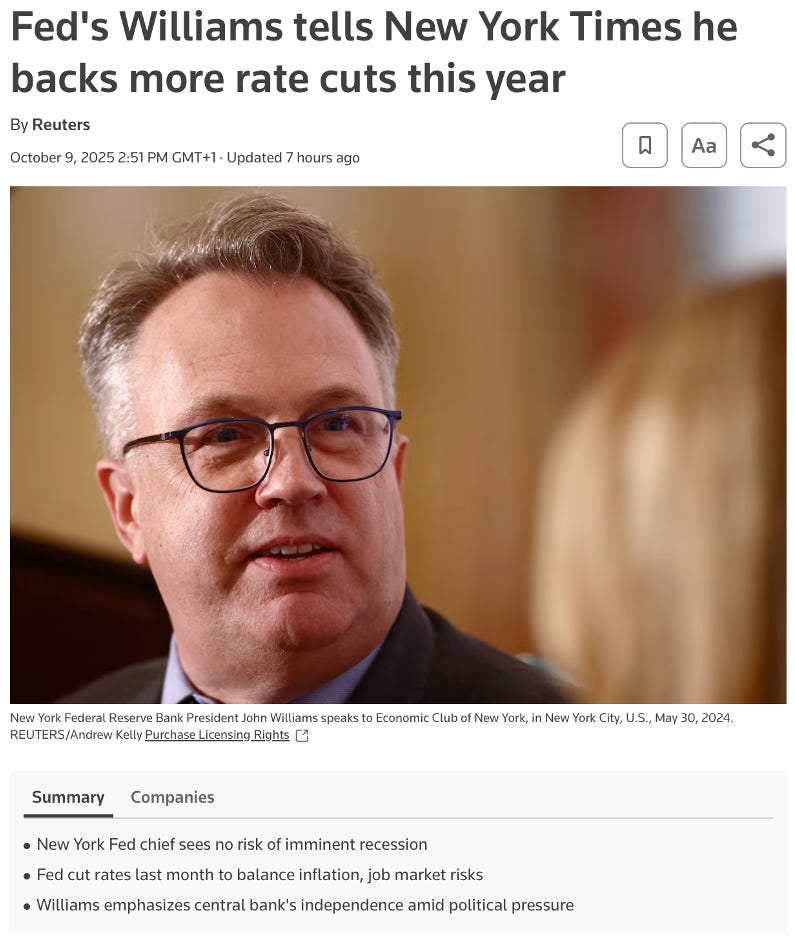
Liquidity: When money supply and financial conditions ease, risk assets levitate; when liquidity tightens, even great stories sag. I track Global M2 (running near ~8% y/y), central-bank balance sheets, the Fed’s TGA and ON RRP (the latter now essentially tapped out), the dollar, and bond-market volatility (MOVE). Calm collateral = easy funding = healthier pipes. This month, the liquidity profile remains constructive and the Fed has restarted cuts (4.00–4.25% policy range after September’s trim).
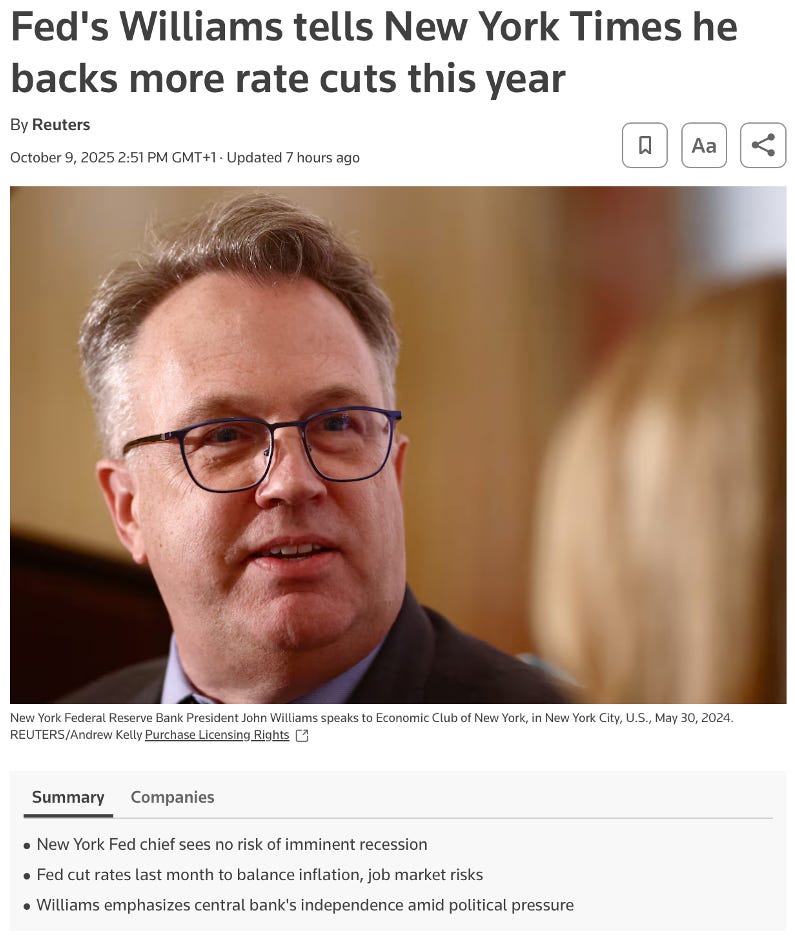
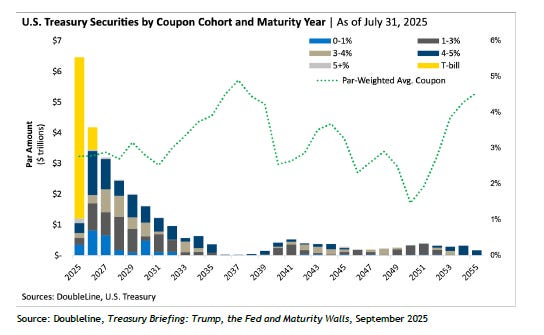
Debt refinancing: The calendar doesn’t care about vibes. The U.S. alone must roll >$9T in the next 12 months, with a T-bill stack near $7T. That’s why political pressure for lower rates is intensifying—cheaper bills today reduce rollover pain. My base case: one more push of liquidity to grease this wall, carrying the melt-up further even as the cycle ages. But the shoreline is in sight. When the tide turns, it can turn fast.
I lean on thinkers like Michael Howell (Global Liquidity Index) and Raoul Pal (follow the money, not the narrative). Howell’s three dials—Fed net liquidity, China liquidity/credit impulse, and bond vol—are still supportive, though late-cycle. Net: tide rising, but late in the wave.
Positioning: participate, don’t chase
With liquidity still friendly and refinancing pressure building, the debasement trade keeps working. But I’m not confusing up-and-to-the-right with invincibility. We stick to the boring stuff that works:
Pre-commit trims (bank gains in melt-ups).
Respect invalidations.
Add only on strength; never add to losers.
Size so three losers in a row don’t wreck the book.
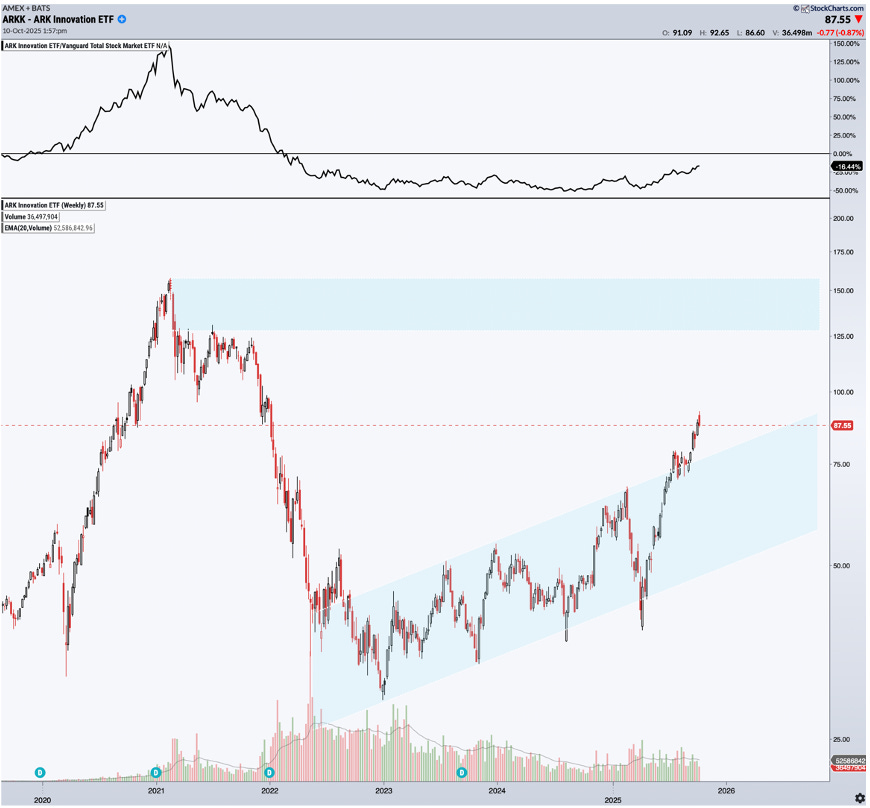
That discipline showed up in our Position Progress: we trimmed half of the gold-miners sleeve after >100% moves (GDX +104.4%, GDXJ +110.2% on the trimmed halves). We also closed half of ARKK at $86.52, locking a +92.44% gain on that tranche. “Sell half after a double” isn’t bravado—it’s rules over opinion.
If you want the full package—my working checklists, trigger levels, invalidations, and the Model Portfolio table with weights for new subscribers—join the premium tier at ➡️ VMF Research. That’s where we publish the complete SAA and Alpha Tier each month.
Two asymmetric shots for this phase
I’ve introduced two new positions sized specifically for this late-cycle, liquidity-led push: Ethereum (ETH) and Solana (SOL)—1.5% each, funded by a 3-point cut to USFR (cash proxy). Entry references: ETH $3,904; SOL $192.50. Why these two? Because all five pillars—fundamentals, technicals, sentiment, macro, liquidity—line up here better than in Bitcoin (which we already hold in size and is further through its breakout).
The fundamentals have shifted with policy.
The GENIUS Act made fully reserved, regulated payment stablecoins a U.S. reality (clear reserves, disclosures, AML/BSA, federal oversight; payment stablecoins not treated as securities). Translation: the cash leg on-chain is now industrial-grade plumbing. That benefits the networks best positioned to monetize dollars at internet speed, ETH and SOL.
Meanwhile, the pending CLARITY framework aims to formalize issuance, trading venues, custody, and token classification. Cleaner rules compress risk premia and deepen order books. Builders ship. Liquidity follows.
Technicals? Classic pressure cooker.
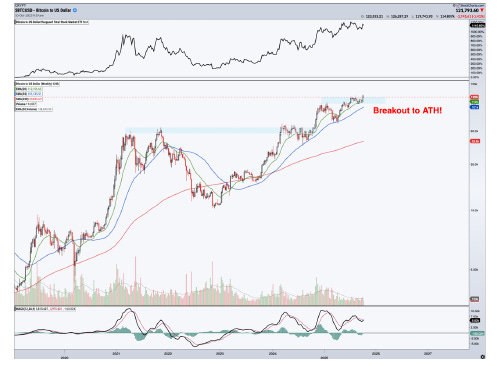
Bitcoin already sits well above its 2021 highs; ETH and SOL are just now pinning those old ceilings with higher lows beneath—bullish continuation in a liquidity tailwind. If the debt wall elicits one more easing impulse, these two have the best leverage to policy clarity + usage growth.
We’ll participate, with tight stop-losses.
The risk that matters
Late-cycle melt-ups are generous… right until they aren’t. The air-pocket risk rises daily in this phase. If liquidity stalls (or even if belief in future liquidity falters), forward returns compress and drawdowns get violent. That’s why we push participation and defense in the same breath. Our “boring” checklist—thesis in two sentences, catalysts identified, liquidity/Refi dials tagged green/amber/red, pre-set trims, hard stops, and a post-trade debrief—keeps us honest when the room gets loud. Process is oxygen.
What to do with this (today)
Run a checklist. Before you click, write: thesis, trigger, invalidation, size. Tape it to your screen and use it when you’re tired or excited (same problem, different emotion).
Size with the cycle. Liquidity/Refi green? You can run full size. Mixed? Half size. Red? Core only. Survival is an edge.
Bank principal on doubles. You’ll like melt-ups more when you keep the gains.
Watch the plumbing. MOVE, ON RRP/TGA, Global M2, China credit pulse. If these turn, you turn.
Final word (and an invite)
You don’t need to predict the top; you need a system that lets you keep what you made and press when odds are in your favor. That’s what this month’s SAA delivers: the checklist logic, the liquidity/Refi map, and two asymmetric adds that fit the moment. Uptober can be generous. Let’s convert generosity into lasting capital—by following the rules we set when we were calm.
If you want the full package—my working checklists, trigger levels, invalidations, and the Model Portfolio table with weights for new subscribers—join the premium tier at ➡️ VMF Research. That’s where we publish the complete SAA and Alpha Tier each month.
Disclaimer
The information provided herein is for general informational purposes only and does not constitute financial advice or a recommendation to buy, sell, or hold any investment. It is not tailored to any specific individual or investor profile. All investments involve risks, and past performance is not indicative of future results. Before making any investment decisions, it is important to consider your own financial situation and risk tolerance. We do not guarantee the accuracy, completeness, or reliability of any information provided, and we disclaim any liability for any loss or damage arising from reliance on the information herein. Readers are advised to consult with an authorized financial intermediary before making any investment decisions.