

The following analysis is based on the weekly update released on March 28, 2026.
What if this is just Groundhog Day all over again?
Over the past week, investors have continued to grapple with the same central fear we highlighted in our last note: that the war with Iran, through its impact on energy prices, could tighten financial conditions further, deepen the ongoing risk-off wave, and push the market into a much more disorderly correction.
That risk remains very much alive.
In fact, despite some attempts by the Trump administration to soften its tone and scale down the conflict, Iran has shown little willingness to cooperate.
So, while we still believe the political incentive for another T.A.C.O. remains strong, the path toward de-escalation is proving neither immediate nor straightforward.
Still, the most important chart to watch right now may not be oil... but the S&P 500 itself. Take a look at the chart below.
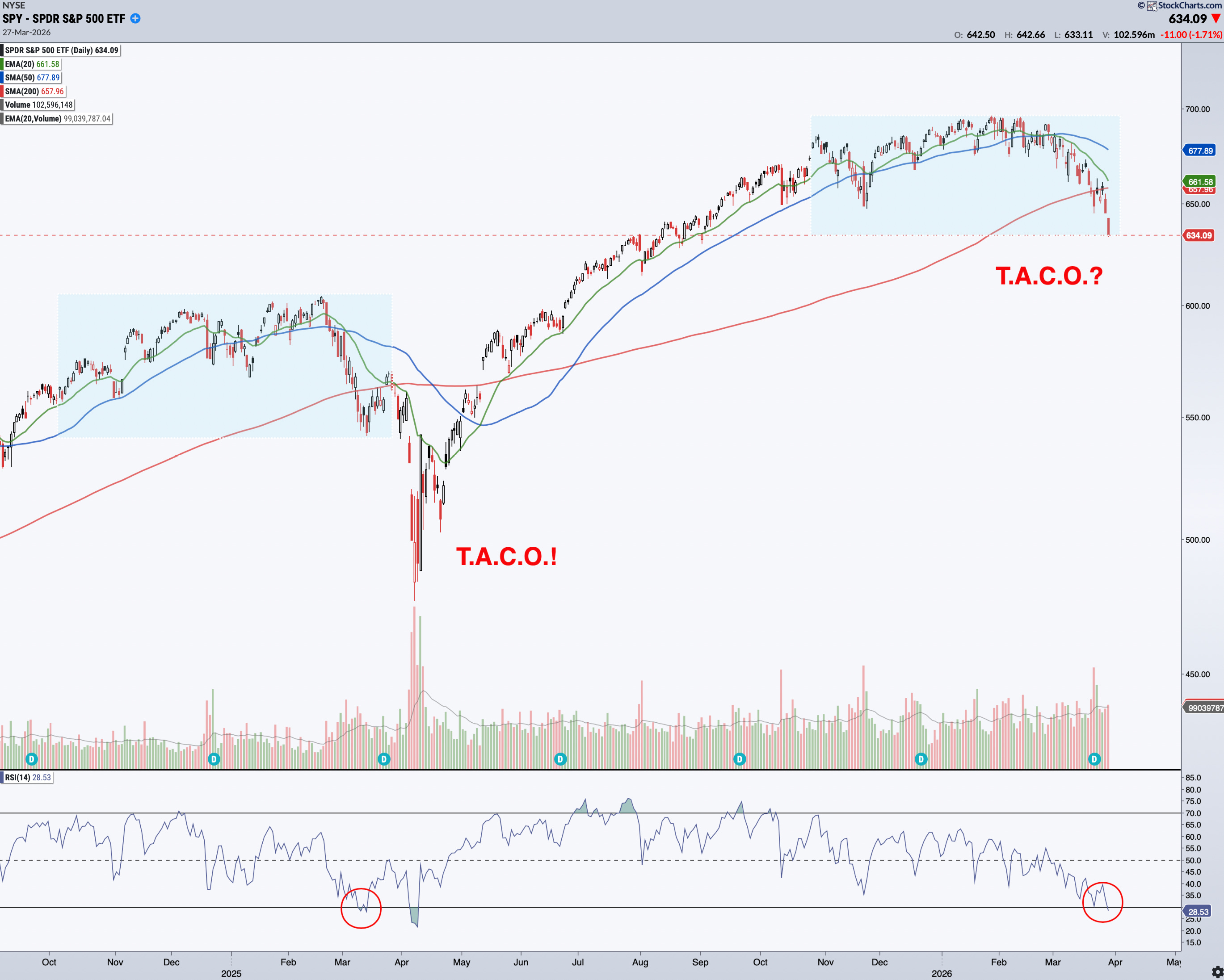
As you can see, the current pattern is beginning to look eerily similar to the Liberation Day debacle of 2025, the episode that ultimately culminated in a major Trump pivot from Main Street to Wall Street.
Back then, the market rolled over, lost momentum, broke down, and eventually forced a response.
Today, we see a very similar setup unfolding once again: the index has broken below its 200-day moving average, momentum has deteriorated materially, and RSI is now revisiting oversold territory. In other words, we may once again be approaching the zone where financial markets begin to exert much greater political pressure.
And that level matters.
Historically, once the S&P 500 loses its 200-day moving average, the character of the tape can change quickly.
Volatility tends to expand, downside moves can accelerate, and investors begin to pay much closer attention to all the things they were previously willing to ignore. Add to that the fact that we are in a midterm year, which historically has not been especially kind to equity returns, and we believe it is highly unlikely that the Trump administration is oblivious to the risks associated with allowing this drawdown to deepen much further. So, our working hypothesis remains intact:
Trump will continue to press for a T.A.C.O.
In fact, if anything, the bar is now even lower for positive surprises. Sentiment is poor, the technical damage is mounting, and the market is increasingly leaning toward a more persistent and economically damaging conflict.
That is precisely why any credible signal of de-escalation, however imperfect, could still have an outsized impact on asset prices. We may be early once again... but for now, we continue to believe that the political, market, and economic incentives are all pushing in the same direction.
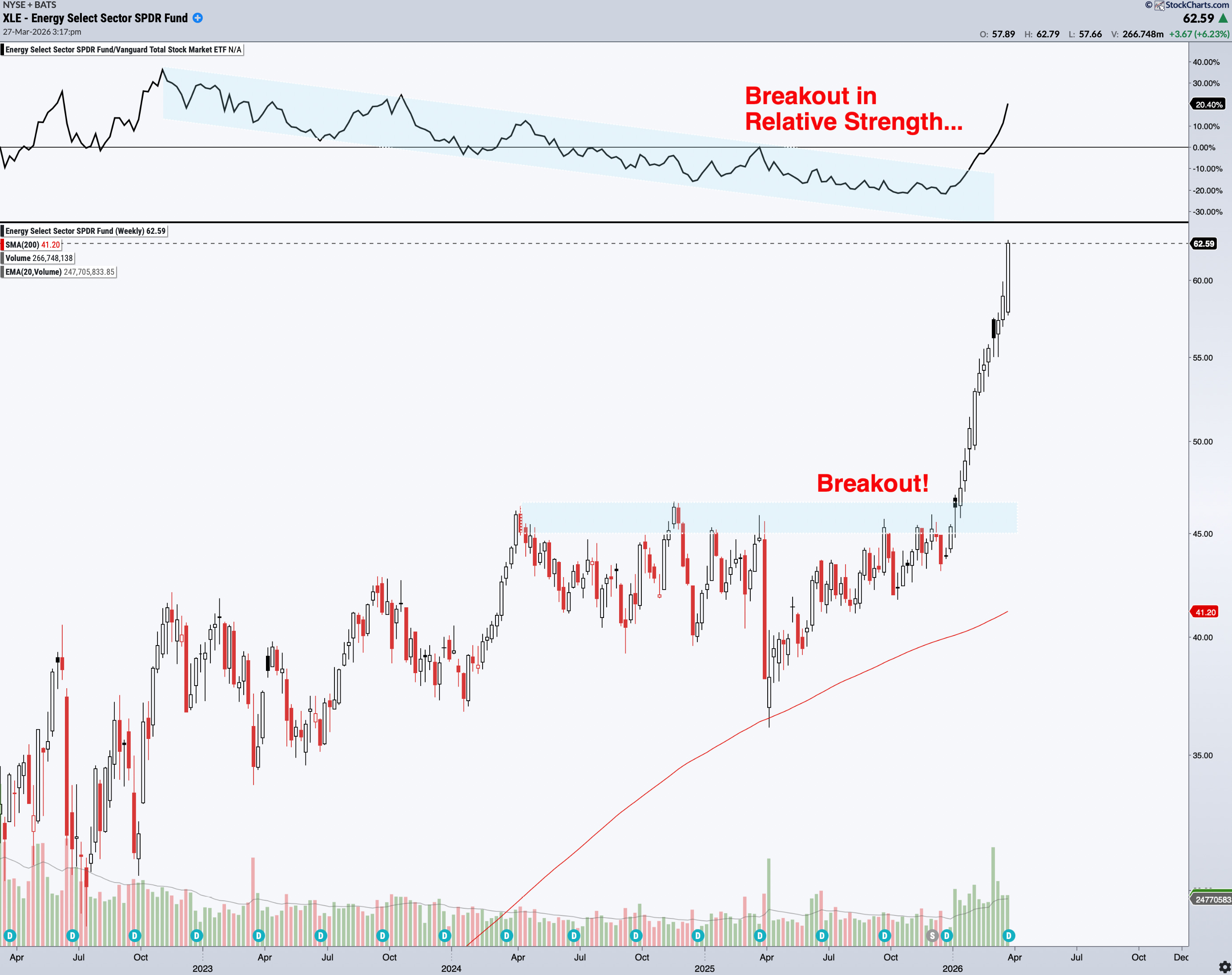
Meanwhile, while the broader risk-off wave continues to ravage financial markets, several pockets of relative and absolute strength remain visible in our Model Portfolios. Most notably, our overweight in energy equities continues to behave exactly as one would expect in this new market regime... as a true diversifier.
We will enter our Spring publishing break next week, and you can expect your next monthly issue on April 10.
Good investing!
Vasco Marques de Freitas, CFA, CMT
Disclaimer
The information provided herein is for general informational purposes only and does not constitute financial advice or a recommendation to buy, sell, or hold any investment. It is not tailored to any specific individual or investor profile. All investments involve risks, and past performance is not indicative of future results. Before making any investment decisions, it is important to consider your own financial situation and risk tolerance. We do not guarantee the accuracy, completeness, or reliability of any information provided, and we disclaim any liability for any loss or damage arising from reliance on the information herein. Readers are advised to consult with an authorized financial intermediary before making any investment decisions.